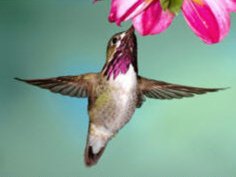
In the past 10-15 years, hummingbird feeding has become increasingly more popular and therefore many more people have placed hummingbird feeders in their yard and are maintaining them. The increased number of feeders means that people “forget” and leave their feeders up past Labor Day. Many people believe that to be the traditional date for taking down hummingbird feeders, but there is no such thing. Let me explain.
It is impossible to provide an exact date by which time hummingbird feeders should be taken down. It is believed that migrating hummingbirds may be helped by feeders that are left up until at least two weeks have passed since seeing your last hummingbird. Contrary to what many people believe, hummingbirds will migrate even if your hummingbird feeders are not taken down. Males generally migrate several weeks ahead of immature hummingbirds, which are also known as new hatchlings, and females. When migration occurs is determined by a change in the length of the day or photoperiod.
We all know the power and reach of the Internet and it has certainly made a difference in this matter. Due to the Internet, people have become more aware of the existence of winter hummingbirds. The Internet has also made it much easier for people to learn of the opinions of hummingbird experts and then to contact them via e-mail.
The increase in warm weather during the past several years may explain why vagrant hummingbirds have wandered further than normal. Habitat destruction may also offer an explanation why more hummingbirds have been forced to wander. The traditional wintering grounds of the hummingbird, in the tropics, may have been destroyed thus forcing them to wander.
Today is Election Day 2008 in the United States. This is the day that we as American citizens have the right to go to the polls and cast our ballot for the candidates of our choice. I don’t know about you but I was truly beginning to wonder if this day would actually ever truly arrive, because the campaigning seemed to have been going on for the past two years of so. Enough already! The end is finally upon us. Yea! Regardless for whom you choose to cast your ballot, I would encourage everyone to go to the polls and let your opinions be known. Don’t let your busy, hectic lives be the cause of your not taking time to vote.
After all, regardless of the outcome, this election will make history. We will either elect the first African American President or the first women Vice President. I, for one, want to make sure my opinion has been expressed in this matter. That way it will be easier for me to know that I did my small part to take part in this historical event in the history of our country.
I am not an overly political individual, but I do feel that it is important for everyone to get out and vote and thereby express your opinion in this election. Here in America, we have the freedom to vote for whomever we choose. The same can’t be said for other countries of the world, so you ought to count yourself blessed to have this privilege and not take the responsibility that comes with it lightly. If you choose not to exercise your freedom of choice and right to vote, I don’t feel that you have earned the right to complain if you don’t like the election results, no matter what they may be. So, do us all a favor and exercise your right to vote…you will feel better knowing that you did so.
On a personal note, this day also marks my sister, Karie’s 50th birthday. Happy birthday, sis! I wanted you to know that I was thinking of you as you mark this milestone in your life. You are probably still traveling, as a result of your move from Florida back to Texas, so I won’t be able to reach you. Have a great day! I’m very happy that you will be much closer to the family as a result of the move.
There are far too many species of hummingbirds to mention every variety in this post, but this information will give you some general information on the migration of several different species of hummingbirds.
Ruby-throated Hummingbird Migration
Ruby-throated Hummingbirds normally spend the winter in Central America. From March through May they migrate north, some through the eastern two thirds of Texas, some apparently through Cuba and Florida, and some apparently directly across the Gulf of Mexico. Birds reach the southern Gulf coast in late February and early March. Later migrants fly to breeding grounds further north. The farther north they are going the later they travel. Arrival time on the breeding grounds tends to not occur until food plants are blooming. Departure time also corresponds with the end of the blooming season for food plants. Fall migration lasts from late July until late October in the southern states.
Black-chinned Hummingbird Migration
In spring Black-chinned Hummingbirds can be seen returning to Texas, New Mexico, and Arizona from mid-March through May. They reach Southern California by late March. It may be May before the species reaches the northwest states and British Columbia.
In fall they leave west-coast areas in mid-August and September. In Texas they are usually gone by mid-October. Black-chinned hummingbirds winter mostly in Mexico.
Broad-tailed Hummingbird Migration
Broad-tailed Hummingbirds spend the winter in mountains of Mexico. During spring migration they reach west Texas in March and April. In Arizona Broad-tails usually show up in March or early April. More northern states like Wyoming may not get Broad-tails until May. Broad-tails regularly migrate as far west as eastern California.
In fall they leave Wyoming and Colorado in September. Arizona, New Mexico and Texas may see fall migrants as late as October.
Rufous Hummingbird Migration — In spring Rufous Hummingbirds migrate up the Pacific coast, passing through California from February to May. The birds reach British Columbia in early April and Alaska by mid-April. Birds arrive in Idaho and Montana around the end of April.
A flash of harmless lightning,
A mist of rainbow dyes,
The burnished sunbeams brightening
From flower to flower he flies..
~John Banister Tabb
Humming Bird
This video combines the use of video and still highlights from a hummingbird banding workshop in southwestern Colombia in March 2007. The workshop was sponsored by The Hummingbird Conservancy and taught by biologists from the Southeastern Arizona Bird Observatory.
I especially enjoyed the still highlights myself because it allowed me to see the birds up close. There were numerous species shown on there that I had never before heard of let alone seen. Maybe the same will also be true for you. Regardless, I hope you enjoy the video.